Science
Not All Evidence Is Created Equal
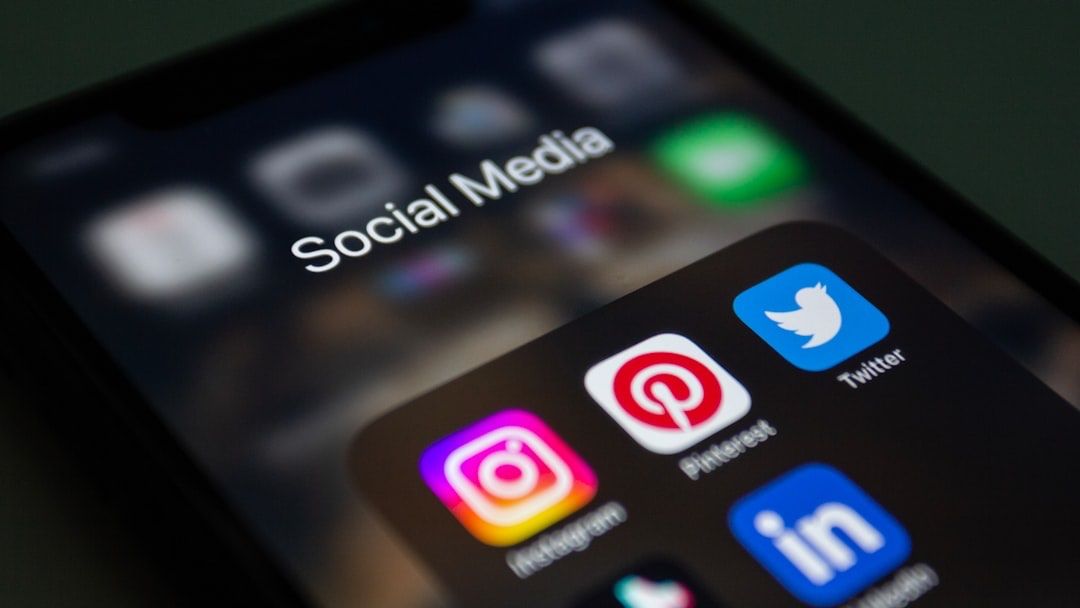
The internet is full of health advice — from Instagram influencers, industry-funded studies, and self-proclaimed experts. Here's how to tell science from noise.
by Evida Life Editorial Team · Published April 13, 2026 · 10 min read
The trust crisis in health information
We live in an era of unprecedented access to health information — and unprecedented confusion about what to believe. A 2023 survey found that 65% of Gen Z and Millennials get their primary health advice from social media rather than medical professionals. Instagram reels, TikTok videos, and YouTube channels with millions of followers confidently promote conflicting dietary advice: carnivore, keto, raw vegan, seed oil avoidance, liver king protocols — each backed by passionate testimonials and cherry-picked studies.
The problem isn't that information is unavailable. It's that most people have never been taught how to evaluate it. Not all evidence carries the same weight. A personal story is not a clinical trial. A single study is not a scientific consensus. And a confident presenter with abs is not a substitute for decades of rigorous research.
This article is a practical guide. By the end, you'll know how to read a study abstract in under a minute, spot the three statistical tricks most commonly used to mislead readers, and apply a five-step checklist before changing anything about your diet based on something you saw online.
The evidence pyramid
Scientists have developed a hierarchy of evidence quality. Think of it as a pyramid: the base is wide and easy to produce but unreliable, while the top is narrow, hard to achieve, but represents the strongest knowledge we have.
We build our recommendations on levels 4 and 5 — randomized controlled trials, systematic reviews, and meta-analyses. Not influencer opinions. Not single studies. Not trends.
It's worth pausing on why the pyramid looks the way it does. A single anecdote — "I went carnivore and lost 40 pounds" — tells you what happened to one person. It says nothing about whether the diet caused the weight loss, what else changed at the same time, whether the person will keep the weight off, or whether the approach would work for anyone else. An observational study of 50,000 people is much more informative, but still can't fully separate cause from coincidence — people who eat more vegetables also tend to exercise more, smoke less, and earn more. A randomized controlled trial assigns people to groups at random, which is the only reliable way to rule out those hidden confounders. And a meta-analysis pools dozens of trials together, which is why it sits at the top: it reflects what many independent research teams found across many populations, not what one team found once.
Why people trust the wrong sources
Understanding why misinformation spreads is just as important as knowing what good evidence looks like. Four major sources dominate the health misinformation landscape:
No peer review. Algorithms reward controversy over accuracy. Many promote products they're paid to endorse.
Studies funded by the food industry are 4–8x more likely to produce favorable results. Conflicts of interest are often undisclosed.
Clickbait headlines. Cherry-picked studies. "New superfood" stories that misrepresent the actual research findings.
Naturopaths, wellness coaches, and self-certified "nutritionists" making clinical claims without training in evidence-based medicine.
The pattern is clear: the sources people trust most are the ones with the weakest evidence and the strongest financial incentives to mislead.
The industry-funded science problem
This deserves special attention. In 2016, an investigation published in JAMA Internal Medicine revealed that the sugar industry had secretly paid Harvard scientists in the 1960s to publish research blaming dietary fat — not sugar — for heart disease. 1 This single deception shaped dietary guidelines for decades and likely contributed to millions of preventable deaths.
It's not an isolated case. A systematic analysis found that studies funded by the food and beverage industry were 4 to 8 times more likely to produce results favorable to the sponsor. 2 Coca-Cola funded the Global Energy Balance Network to shift blame for obesity from sugary drinks to insufficient exercise. The dairy industry funds studies showing benefits of milk consumption. The meat industry funds studies questioning the harms of processed meat.
This doesn't mean all industry-funded research is wrong. But it means you should always check who paid for a study before trusting its conclusions. Most journals now require authors to disclose funding sources and conflicts of interest in a declaration near the end of the paper — look for it before you decide how much weight to give the results.
How to read a study abstract in 60 seconds
Most people never read past the headline. Journalists rarely read past the abstract. You can beat both groups by learning to scan the abstract — the short summary at the top of every scientific paper — for a handful of specific signals.
1. Study design. Look for the one-line methods description. Words that signal strong evidence: randomized, controlled, double-blind, meta-analysis, systematic review. Words that signal weaker evidence: cross-sectional, case-control, observational, cohort, pilot, in-vitro, mice, rats. Neither automatically disqualifies a study — but an RCT tells you much more than a cohort, and a cohort tells you much more than a rat study.
2. Sample size. A trial of 30 people tells you far less than a trial of 3,000. Very small samples produce flashy results that often evaporate when someone tries to replicate them. Be skeptical of bold claims based on fewer than 100 participants.
3. Duration. Nutrition studies are especially vulnerable to short follow-ups. A 12-week weight-loss study says nothing about whether the diet works long-term. Any claim about longevity, cancer risk, or cardiovascular disease built on a three-month trial should be treated as suggestive, not proven.
4. Effect size. Abstracts usually quote the main result in a single sentence. Read it carefully: is the effect large and practically meaningful, or small and marginally significant? A drug that lowers cholesterol by 40% is meaningfully different from one that lowers it by 2%.
5. The "conclusion" sentence. Good abstracts use measured language: "our findings suggest," "warrants further study," "is consistent with." Bad abstracts over-claim: "proves," "establishes," "demonstrates conclusively." Science almost never proves. It builds evidence.
Common statistical traps
Even when a study is real and well-designed, the numbers can be presented in ways that mislead. These three tricks account for most of the confusion in popular health coverage.
Relative risk vs. absolute risk. This is the single most common statistical sleight of hand. Imagine a drug that cuts your risk of a heart attack from 2% to 1%. A headline can legitimately report either "halves heart attack risk" (relative risk: 50% reduction) or "reduces heart attack risk by 1 percentage point" (absolute risk: 1%). Both are true. But they feel completely different. A 50% reduction sounds life-changing. A 1% reduction sounds barely worth a side-effect profile. Always look for the absolute numbers — not just the ratio.
Statistical significance vs. clinical significance. A study with enough participants can find that a tiny, irrelevant effect is "statistically significant" (p < 0.05), meaning the effect probably isn't due to random chance. That says nothing about whether the effect matters. A supplement that raises HDL cholesterol by 0.3 mg/dL can be statistically significant and clinically meaningless. Ask: would a doctor change their advice based on a change this size?
P-hacking and multiple comparisons. If you run 20 tests on the same dataset, roughly one of them will come out "significant" purely by chance, even if nothing real is going on. Researchers under pressure to publish sometimes test dozens of endpoints and only report the few that turned up positive. This is why systematic reviews and pre-registered trials (where researchers commit in advance to what they'll test) are so valuable — they're much harder to cherry-pick.
Two more concepts worth knowing: Number Needed to Treat (NNT) is the number of people who have to take a treatment for one person to benefit. An NNT of 5 is excellent; an NNT of 200 means the drug is almost useless at the population level. And confidence intervals tell you the range of plausible true effects — if a study reports a 30% benefit with a 95% confidence interval of -5% to 65%, that range includes "no benefit at all," and you should treat the headline with caution.
How to spot weak evidence
Here are practical red flags that a health claim may not be trustworthy:
No citation to a peer-reviewed source. If someone makes a specific health claim without linking to a published study, that's a red flag. Legitimate claims can always be traced back to published research.
"Studies show" without naming the study. This vague phrasing often masks the fact that the actual evidence is weak, misrepresented, or doesn't exist. Always ask: which study? Published where? Funded by whom?
Reliance on animal or in-vitro studies. Cell studies and animal models are important for generating hypotheses, but they frequently don't translate to humans. Many compounds that cure cancer in mice have zero effect in human trials.
Cherry-picking single studies. Science is a body of work, not a single paper. If someone cites one study while ignoring 20 that show the opposite result, they're not doing science — they're selling a narrative.
The presenter sells what they recommend. If someone promotes a supplement, diet plan, or product that they profit from, their objectivity is compromised — regardless of their credentials.
Appeals to "ancestral," "natural," or "what our grandparents ate." Nature is not a gentle parent. Pre-modern populations often died young of infections, childbirth complications, and malnutrition. "Natural" is not a scientific category; "works in a properly controlled trial" is.
Case studies and miracle testimonials. A single transformation story is the weakest possible evidence. People recover from illness for hundreds of reasons that have nothing to do with the intervention they credit. If the claim can only be supported by anecdotes, it isn't supported.
A five-step checklist for vetting any health claim
Next time you see a bold health claim online, run it through these five questions before you change anything about your life.
1. Is there a peer-reviewed citation? If there's no link to a published paper, stop here. If there is a link, open it and read at least the abstract.
2. What kind of study is it? A randomized controlled trial or meta-analysis is far stronger than a single observational study, which is far stronger than a mouse experiment or case report. Use the pyramid.
3. Who funded it? Look at the "Funding" or "Conflicts of interest" section. If the funder has a financial stake in the result, adjust your confidence downward — not to zero, but meaningfully.
4. Is the effect size large enough to matter? Is it reported in absolute terms, or only as a ratio? Would the change make a clinically meaningful difference, or is it statistically significant but practically tiny?
5. Does the body of evidence agree? One study is never enough. Does a systematic review or major guideline body (WHO, AHA, EAT-Lancet, NICE) reach the same conclusion? If not, treat the claim as interesting but unproven.
If a claim fails any of steps 1–3, it probably shouldn't change your behavior. If it passes all five, it's worth taking seriously.
Our evidence principles
At Evida Life, we follow strict principles for evaluating evidence:
Peer-reviewed sources only — We rely exclusively on studies published in peer-reviewed scientific journals and evaluated by domain experts. This means the research has been scrutinized by independent scientists before publication.
Meta-analyses preferred — Single studies can be misleading due to small sample sizes, confounding variables, or statistical flukes. Where possible, we prioritize systematic reviews and meta-analyses that synthesize large bodies of evidence across multiple studies.
Continuously updated — Science is not static. We regularly review our recommendations and update them as new evidence emerges. What was believed 10 years ago may have been overturned by better research.
Transparent uncertainty — Not everything is proven beyond doubt. We clearly communicate where evidence is strong, where it's emerging, and where further research is needed. Honesty about uncertainty is a sign of scientific integrity.
Gold standard focus — The gold standard in medical research is the randomized, double-blind, placebo-controlled clinical trial. We prioritize evidence from RCTs over observational data, and systematic reviews over individual studies.
No commercial conflicts — We do not sell supplements, do not take industry funding, and do not accept money for product reviews. Our only incentive is to help you live longer and better.
Our key sources
We draw our evidence from the world's most respected scientific institutions and databases:
NutritionFacts.org — daily updated nutrition research reviews by Dr. Michael Greger and team, covering every study published in the English-language nutrition literature. PubMed — the U.S. National Library of Medicine's database of over 36 million biomedical citations. The Lancet and NEJM — the world's highest-impact medical journals. The EAT-Lancet Commission — the most comprehensive scientific framework for healthy diets within planetary boundaries, authored by 37 scientists from 16 countries. 3 Blue Zones research — the most extensive epidemiological study of the world's longest-lived populations. Cochrane Reviews — independent, gold-standard systematic reviews of medical interventions, produced by a global network of researchers with strict conflict-of-interest rules.
The bottom line: Before you change your diet based on anything you read or watch, ask three questions: Is there a peer-reviewed study? Who funded it? Does the overall body of evidence support this claim, or just one cherry-picked paper? If the answer to any of those is unsatisfying, the claim belongs in the "interesting but unproven" bucket — not in your meal plan.
3 References
- 1Sugar Industry and Coronary Heart Disease Research: A Historical AnalysisKearns C.E. et al.·JAMA Internal Medicine· 2016study
- 2Relationship between funding source and conclusion among nutrition-related scientific articlesLesser L.I. et al.·PLOS Medicine· 2007study
- 3Food in the Anthropocene: the EAT-Lancet Commission on healthy diets from sustainable food systemsWillett W. et al.·The Lancet· 2019study
Frequently Asked Questions
How do I tell if a health claim is trustworthy?
Why are expert opinions near the bottom of the evidence pyramid?
Are randomized trials always the best evidence?
Should I trust health advice from influencers?
How do I check if a study is funded by industry?
Ask the coach about this article
I just read the article "Not All Evidence Is Created Equal". Can you help me apply the key points to my personal situation?
Tags
Deepen your health knowledge
Create a free account to access the AI research engine, track your nutrition, and get personalized insights.
Sign Up FreeAlready have an account? Sign in
More Articles

Nobody Dies of Old Age
The leading causes of death are preventable. Aging is the real risk factor — and your diet directly controls 11 biological mechanisms that determine how fast you age.

Food & Longevity: What 30 Years of Research Tells Us
Tessiere et al. (2025) in Nature Medicine followed 105,015 people for 30 years to identify which foods promote — and which accelerate — aging across 6 health dimensions.