Start with the comparison
Is olive oil healthy? The answer depends on what it replaces and which outcome is measured. Research comparing dietary patterns, short-term blood markers and individual foods addresses different questions. In PREDIMED, both a Mediterranean diet supplemented with extra-virgin olive oil and one supplemented with nuts had fewer major cardiovascular events than the control diet. 20 This article separates that result from smaller mechanistic studies and observational comparisons.
Oil, whole foods and the outcome being measured
Oil and whole foods play different roles in a meal. That distinction alone does not establish which choice leads to better health. Olive oil contains fatty acids and smaller amounts of other compounds; virgin oils retain more phenolic compounds than refined oil. A trial in healthy men found that phenolic content affected some blood lipid and oxidative-stress markers. 22
Both supplemented Mediterranean diets had fewer major cardiovascular events than the control diet. 20Editorial summary of the corrected PREDIMED report (2018)
Short-term markers and clinical outcomes
A short-term change in a blood-vessel or laboratory measurement should not be treated as a direct prediction of heart attacks. Clinical events require separate evidence.
The corrected PREDIMED report found fewer major cardiovascular events with both supplemented Mediterranean diets than with the control diet. 20
PREDIMED: clinical events and a smaller imaging study
PREDIMED enrolled 7,447 adults in Spain at high cardiovascular risk. Its corrected 2018 analysis compared a Mediterranean diet supplemented with extra-virgin olive oil, a Mediterranean diet supplemented with mixed nuts, and advice to reduce dietary fat. Median follow-up was 4.8 years. Both supplemented patterns had fewer major cardiovascular events than the control diet. The report was reanalysed after randomization irregularities were identified. 20
A separate carotid-imaging substudy included 175 participants, with complete data for 164, followed for an average of 2.4 years. Some artery-wall and plaque measurements favored the nut-supplemented diet versus control; significant changes were not found for the olive-oil arm. This smaller study addresses imaging markers and does not prove that nuts universally outperform olive oil for clinical events. 21
Extra-virgin and refined olive oil
Virgin olive oils generally contain more phenolic compounds than refined olive oil. In the EUROLIVE trial, 200 healthy men received oils with differing phenolic content for three-week periods. Higher phenolic content was associated with more favorable changes in some lipid and oxidative-stress markers. These short interventions did not test the prevention of cancer, dementia or every cardiovascular condition. 22
Refining and process contaminants
3-MCPD and related esters can form during oil refining. EFSA’s 2018 assessment considered food exposure safe for most consumers, while identifying potential concern for some high consumers in younger age groups. Risk depends on exposure, rather than the mere presence of a contaminant. 23
What the observational studies show
Two US cohorts followed 61,181 women and 31,797 men for 24 years. Higher olive-oil intake was associated with lower cardiovascular and coronary heart disease risk. Replacing butter, margarine, mayonnaise or dairy fat with olive oil was also associated with lower risk. No significant benefit appeared when olive oil was compared with other plant oils combined. These were observational comparisons, so residual confounding remains possible. 8 The choice being replaced matters: this study does not show that olive oil is superior to every food, or inferior to all whole plant foods.
Polyphenols: what human trials can show
The EUROLIVE randomized crossover trial compared olive oils that differed in phenolic content. The 200 healthy male volunteers used each oil for three weeks. Oils with more phenolic compounds produced more favorable changes in HDL cholesterol and some markers of lipid oxidation. 22
These findings help explain why oils with similar fatty-acid profiles can differ biologically. They concern laboratory risk markers over a short period, not proof of longer life or a substitute for medical treatment. They also do not establish that eating whole olives has the same effect as the studied oils, or that one compound acts like a clinically tested medicine.
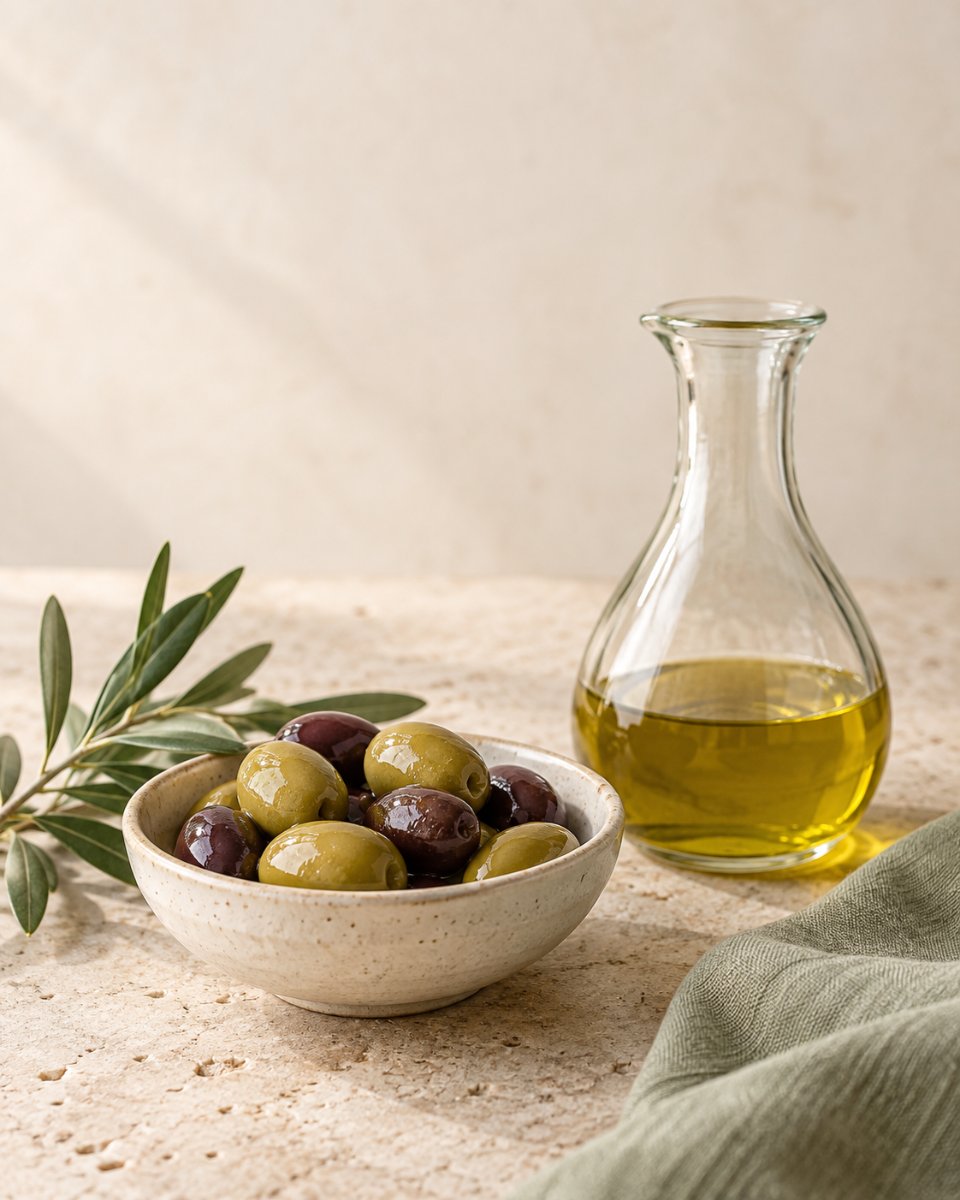
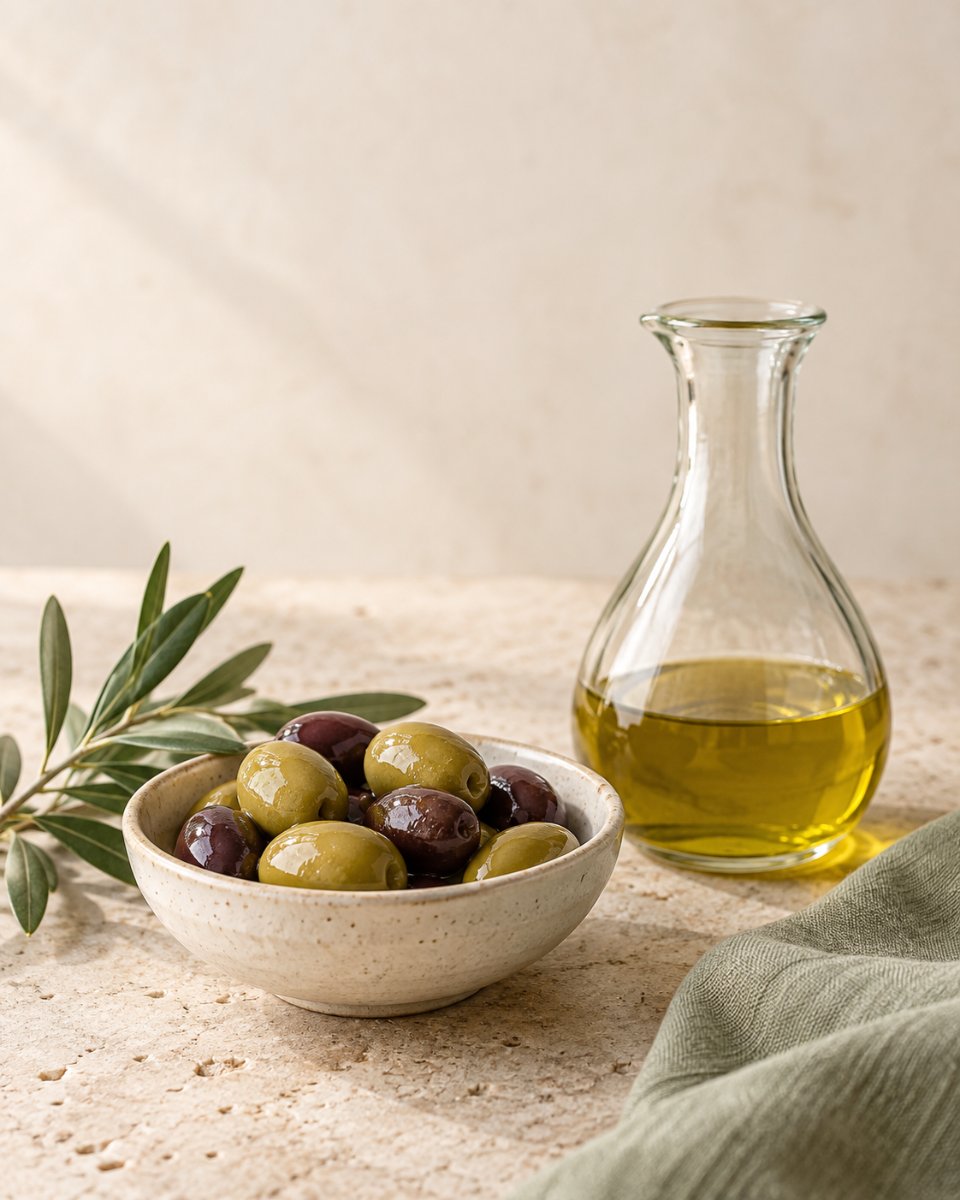
EUROLIVE measured blood lipid and oxidative-stress markers over three-week periods. 22
Olive oil and body weight
In the SUN prospective cohort, 7,368 Spanish university graduates were followed for a median of 28.5 months. Higher olive-oil consumption was not significantly associated with greater weight gain or a higher incidence of overweight or obesity in that Mediterranean dietary setting. 11 This does not mean that quantities are irrelevant or that adding oil causes weight loss. It means the observed weight outcome cannot be inferred from a food’s reputation alone. Consider the overall meal and what the oil replaces.
Cooking choices
Choose a cooking method that suits the dish. If you prefer less added oil, try softening vegetables with small additions of water or broth, or use a blended nut or seed dressing. These are culinary options, not a medical requirement. PREDIMED tested dietary patterns supplemented with extra-virgin olive oil or nuts; it did not establish that everyone should avoid cooking oil or use it only as a cold condiment. 20 Follow the recipe and product guidance rather than assuming that one cooking choice guarantees a health outcome.
Nuts and olives in a varied diet
Nuts are a useful option within a varied plant-rich menu. The PREDIMED nuts arm had fewer major cardiovascular events than its control group, as did the extra-virgin olive-oil arm. 20 A small carotid-imaging substudy favored the nuts-supplemented pattern for some measurements, but that cannot establish a universal ranking of all nuts, whole olives and oils. 21 Choose foods you enjoy and can use consistently. The studies discussed here do not justify converting a serving of nuts into an equivalent number of jogging hours or extra years of life.
Practical Takeaways
Include variety
Try nuts, olives or a nut or seed spread in meals you enjoy. These are practical options, not a claim that every whole-food fat has proved superior to oil. PREDIMED provides clinical-event evidence for a Mediterranean pattern supplemented with mixed nuts. 20
Consider the replacement
Use extra-virgin olive oil if you like its flavor and it suits the dish. Consider replacing some butter or other fats rather than adding it automatically to everything: substitution with olive oil was associated with lower cardiovascular risk in the US cohorts. 8
Keep claims proportionate
Avoid treating any single food as a cure, translating observational associations into guarantees, or assuming all other vegetable oils are inferior. The US analysis did not find a significant cardiovascular advantage for olive oil over other plant oils combined. 8
What the evidence supports
Extra-virgin olive oil can be part of a Mediterranean-style eating pattern with cardiovascular benefits. PREDIMED supports both the olive-oil-supplemented and nut-supplemented patterns compared with reduced-fat dietary advice; it does not establish a universal winner between those foods. 20 Observational evidence also associates replacing several other fats with olive oil with lower cardiovascular risk, while finding no significant advantage over other plant oils combined. 8 Enjoy nuts, olives and other plant foods as part of varied meals. Choose olive oil for its role in that meal, without expecting any single food to act as a treatment.