The study that mapped food to aging
In March 2025, Tessier and colleagues published an analysis of 105,015 participants from the Nurses’ Health Study and Health Professionals Follow-up Study in Nature Medicine. Follow-up extended for up to 30 years. The researchers examined long-term dietary patterns and individual foods in relation to healthy aging. 1
Healthy aging was a composite outcome: reaching age 70 while remaining free of major chronic diseases and maintaining cognitive, physical and mental health. The paper also examined the five individual domains. The composite and its components should not be treated as six independent outcomes. 1
The useful question is broader than which food might add years to life: which patterns of eating are associated with reaching older age in better health?
Food groups and healthy aging
Tessier and colleagues found higher odds of the combined healthy-aging outcome with greater intake of fruit, vegetables, whole grains, nuts, legumes, unsaturated fats and low-fat dairy. Higher intake of trans fats, sodium, sugary drinks, and red or processed meat was associated with lower odds. 1
This is a qualitative summary, not a numerical benefit score. The study reports adjusted odds ratios. Figure 4 in the original paper gives detailed estimates and results for the individual aging domains. These observational associations do not establish causation. 1
105,015 participants, up to 30 years of follow-up. Observational associations were adjusted for measured differences between participants; residual confounding remains possible. 1
How to read the evidence
An association describes a pattern in the observed data. It does not establish that changing one food caused the outcome. People who eat differently may also differ in activity, smoking, income, health and other habits. Statistical adjustment helps address measured differences, but cannot guarantee that all alternative explanations have been removed.
The original heatmap uses odds ratios comparing higher with lower intake, not a scale of points earned or lost by eating a food. A larger odds ratio is not an equivalent increase in the probability of healthy aging, and it does not tell an individual how many extra years they will live. Read the outcome, comparison and uncertainty together. 1
Foods associated with better outcomes
Higher intake of fruits, vegetables, whole grains, nuts, legumes, unsaturated fats and low-fat dairy was associated with greater odds of the composite healthy-aging outcome. 1
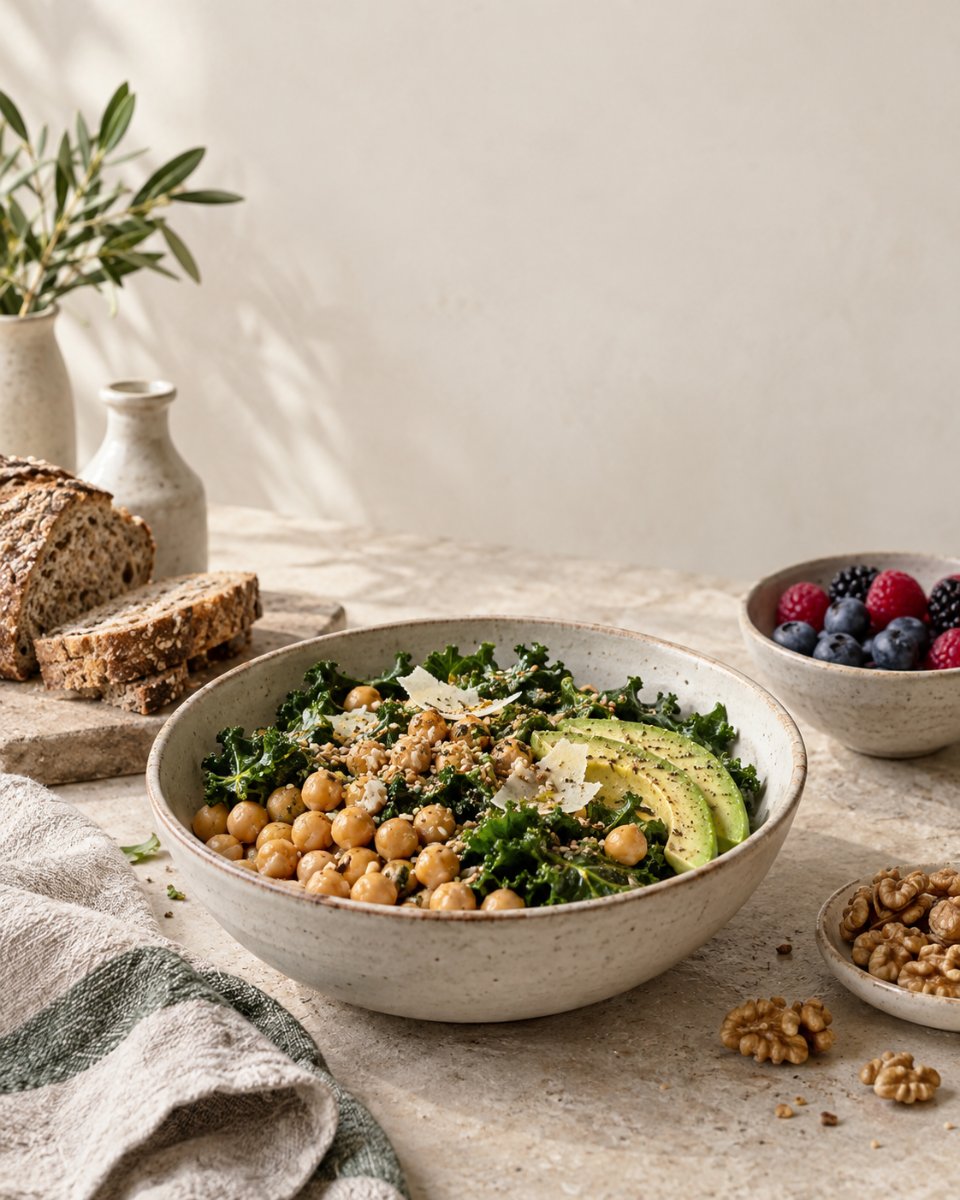
These findings support looking at a varied pattern rather than choosing one supposed superfood. They also do not justify treating every food within a broad group as identical. A bowl of lentils, some fruit, whole-grain bread and vegetables are practical examples of how several of these groups can appear in everyday meals.
The findings describe favorable associations across several food groups. They do not identify one food that everyone should prioritize above all others.
Foods associated with poorer outcomes
Higher intake of trans fats, sodium, sugary beverages, and red or processed meats was associated with lower odds of healthy aging in the study. 1
This is a pattern-level finding, not a prediction that one meal determines someone’s future. The comparison concerns usual dietary intake across groups of people, rather than the consequences of an occasional food. What a person eats more often, and what replaces it, matter when interpreting dietary comparisons.
A practical starting point could be replacing a frequent sugary drink with water or using beans in a meal that usually contains processed meat. Those are meal-planning suggestions, not interventions tested by this cohort analysis.
The mixed middle: context matters
The findings do not divide every food into a universal good-or-bad category. Low-fat dairy was among the groups associated with healthier aging, and several of the favorable dietary patterns include selected animal foods. The paper does not establish that all animal foods should be excluded. 1
Among the eight patterns studied, the Alternative Healthy Eating Index had the strongest association with the composite outcome, while the healthful plant-based index had the weakest association; both were favorable. Rankings also depended on the outcome. 1
This makes the overall pattern a useful starting point. The study can compare eating habits and later health; it cannot determine which biological mechanism explains every food-specific association.
What this means for your plate
The practical message is a flexible, varied eating pattern with plenty of plant foods, rather than a numerical score for each bite. Try a meal built around vegetables, beans or lentils and a whole grain; include fruit or a handful of nuts when they suit your preferences. Adjust examples for allergies, appetite, budget and any advice relevant to your health.
The study supports favorable associations for plant-rich dietary patterns, including patterns with selected animal foods. It does not establish a single mandatory menu or guarantee healthy aging. 1
Use the evidence to make a workable next choice, while keeping its limits in view: long follow-up and a large sample make this informative research, but they do not turn an observational study into a randomized experiment.